
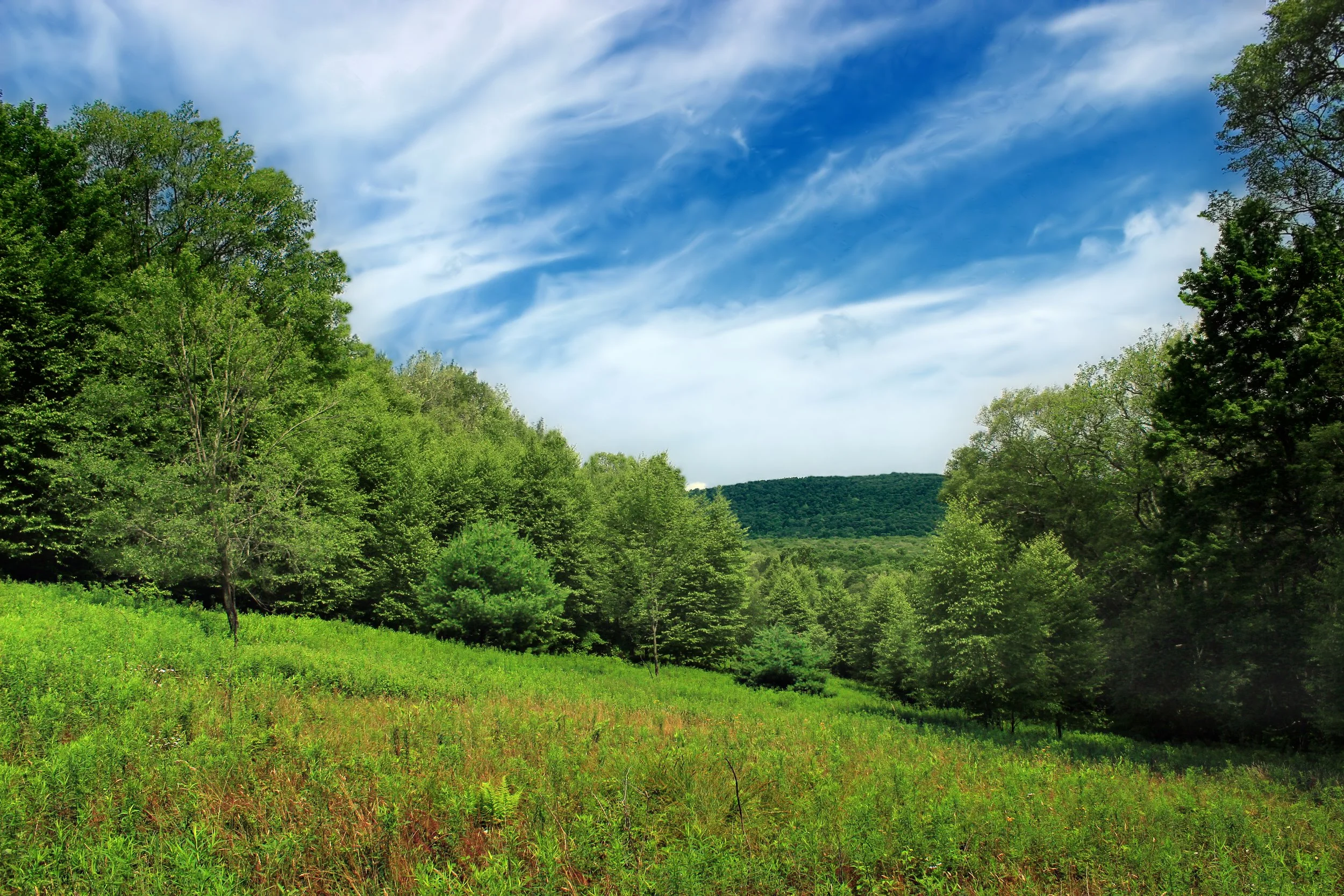
Open fields, clean waterways, pristine woodlands, and abundant wildlife - these are the legacies of Pennsylvania’s central Susquehanna Valley.
Help us make an impact.
For generations these magnificent resources have been our birthright. The primary mission of the Merrill Linn Conservancy is protection/preservation of the natural qualities of our local environment through partnerships with landowners. Landowners have several options available to them. The Linn Conservancy will assist in finding the best conservation tool for protecting your property according to your vision for its future.
Landowners have several options available for protecting your property according to your vision for its future. The Linn Conservancy can assist in finding the best conservation tool to protect your land for generations to come.
-
A donation of land to a land trust constitutes a charitable gift that is tax deductible at full fair market value. We will work with you to establish a vision and management plan for the property. While the conservancy can accept and retain ownership of land, it is not our goal to be a landowner. We might sell the land to a suitable government agency or to another private owner with a conservation easement in place to permanently protect the property according to the donor’s wishes. Proceeds from a sale can fund our long-term commitment to overseeing the property and/or enhance our ability to protect additional land.
-
Conservation easements are voluntary conveyances of rights between a landowner (donor) and a land trust (or other qualified organization) such as the Merrill Linn Land & Waterways Conservancy which is the holder of the easement. This conveyance of rights rides with the property deed in perpetuity and all owners, current and future, are bound by its terms. The donor, in negotiation with a potential holder, places restrictions on the use of the property, in order to protect the natural values of the land. Terms are tailored to meet a donor’s needs and vision for the future of the land. Donation of a conservation easement protects the land permanently while keeping it in private ownership. A conservation easement, held by a land trust, provides permanent protection of the natural values of the site. All rights and privileges for its use, except for the uses restricted under the easement, are available to current and future owners of the land.
Some federal tax advantages might be available to the landowner for placing his/her land under conservation easement protection. The landowner retains all other rights over the property including the right to sell, lease, transfer or mortgage. The landowner can use the land in any way that is consistent with the easement. An easement does not give the public the right to enter the property, unless the landowner specifically requests that this be allowed.
Conservation easements are designed to conserve forever the important resource values of each property. An easement may cover portions of the property or the entire parcel. It is legally binding on all future owners. The holder has a legal obligation to monitor the property to assure that all terms of the conservation easement are being adhered to and to take appropriate action to resolve any matters of concern.
-
In this case a landowner chooses to sell his/her land to a land trust for less than the determined fair market value. Some tax benefits might be credited to the landowner for the difference between the sale price and the fair market value while making the land affordable to the land trust.
-
Bringing a land protection agreement that satisfies all parties to fruition can be a long and time consuming but rewarding process. We suggest that you reach out to our Conservation Coordinator at saveland@linnconservancy.org. Upon receipt, a Conservancy representative will contact you to arrange a visit to the property site and to discuss details of our procedures with you.
At some point a formal appraisal will have to be made of your property and possibly a survey. Neither step should be taken prior to discussing the details of the entire process with Conservancy representatives. We encourage you to learn about and discuss land protection options with your tax and legal advisors and family members.
A helpful document illustrating a model easement document is available from the Pennsylvania Land Trust Association at conserveland.org. Once you get to the PaLTA site go to Model Documents then Model Conservation Easement. This document is frequently updated. Please note that numbers used in the document are only for illustration and are not representative of terms applicable to any specific site.
-
A landowner sells their property and donates some or all of the proceeds to support conservation efforts.description
-
A landowner designates land or its value to be transferred to a conservancy as part of their estate plan.
-
A landowner permanently relinquishes development potential to protect land while retaining other uses.
-
Ownership transfers to a conservancy while the donor continues to use the land for the rest of their life.
-
A landowner donates future ownership while retaining the right to live on or use the land during their lifetime.
Frequently Asked Questoins
-
There are several. Local land trusts such as the Merrill Linn Conservancy can work with a landowner to produce a conservation easement of his/her property. Property can be offered to land trusts or other protective agencies as a charitable donation or through a bargain sale. Farmland owners can consider agricultural land preservation through their county’s agricultural land preservation program by either competing for reimbursement funds or by making a donation of their land to the program. The comments that follow will focus primarily on conservation easements through land trusts such as the Linn Conservancy.
-
This is a conveyance of property rights. Entering into a conservation easement with a qualified organization (the holder) is a voluntary action on the part of the owner of a property. It is an interest in real property that limits certain uses of the property for the advancement of conservation purposes. It provides the holder the right to uphold its terms. Once completed, this conveyance rides with the property deed in perpetuity. All owners and future owners of the property are bound by the terms of the conveyance the terms of which cannot removed from the deed.
-
The key thing to remember is that entering into a conservation easement is a VOLUNTARY action on the part of the property owner. The common use of the term easement suggests a taking of one’s property by, for example, a utility company needing a right of way across the site. While an owner might be monetarily compensated for his/her loss, there is little or no choice as to the fate of the property.
-
You own the property. The property remains in private hands. A land trust is not permitted to own property on which it holds a conservation easement. The owner retains all rights to the property except those he/she voluntarily gives up in the conservation easement document. Subsequent owners have the same rights and are bound by the same restrictions.
Protecting and preserving natural resoruces since 1988.
The Merrill W. Linn Conservancy was founded in 1988 to help protect and preserve natural resources with the generous and ongoing support of community partnerships, memberships, grants, land donations, and volunteer efforts.